BitLocker: Cloud Only vs. Hybrid
- Florian Salzmann
- Posted on 15 Nov, 2021
- Updated on 28 Jul, 2026
- 02 Mins read
- Microsoft Intune,Security,Windows 10,Windows 11,Cloud-native Endpoint Management
Cloud-only BitLocker policies, configured via Intune’s Endpoint security > Disk encryption, work reliably on Azure AD-joined devices but often fail to activate on hybrid-joined ones. For hybrid environments, use the classic Endpoint protection Configuration profile instead - and never assign both policy types to the same device.
For me it’s without question that BitLocker belongs on every device. Whether with a PIN or not depends a bit on the scenario.
For some time now, Endpoint Manager offers the “Endpoint security” tab, where you can manage security settings like Defender settings, Firewall and BitLocker.
In several hybrid environments I noticed that many devices have problems with the new configuration and don’t activate BitLocker. Because of this, I started to only use BitLocker via “Endpoint security” in environments where exclusively cloud only devices are used. For hybrid environments (starting with an Azure AD Hybrid Join device) I still use the classic “Endpoint protection” “Configuration profile”.
What’s the Difference Between Cloud Only and Hybrid BitLocker?
| Cloud Only | Hybrid | |
|---|---|---|
| Where to configure | Endpoint security > Disk encryption | Devices > Windows > Configuration profiles |
| Policy name used here | ”WIN BitLocker" | "WIN BitLocker (Classic)“ |
| Best for | Azure AD (Entra ID) joined, cloud-only devices | Azure AD Hybrid Join devices - Autopilot hybrid, AD + Hybrid Sync, or GPO enrollment |
| Common issue | None when scoped correctly | Activation failures if the cloud-only profile is also assigned |
| Key rule | Use only on cloud-only devices | Assign only one BitLocker profile per device - never both |
How Do You Configure BitLocker for Cloud-Only Devices?
- I create the policy under Endpoint security > Disk encryption > Create Policy
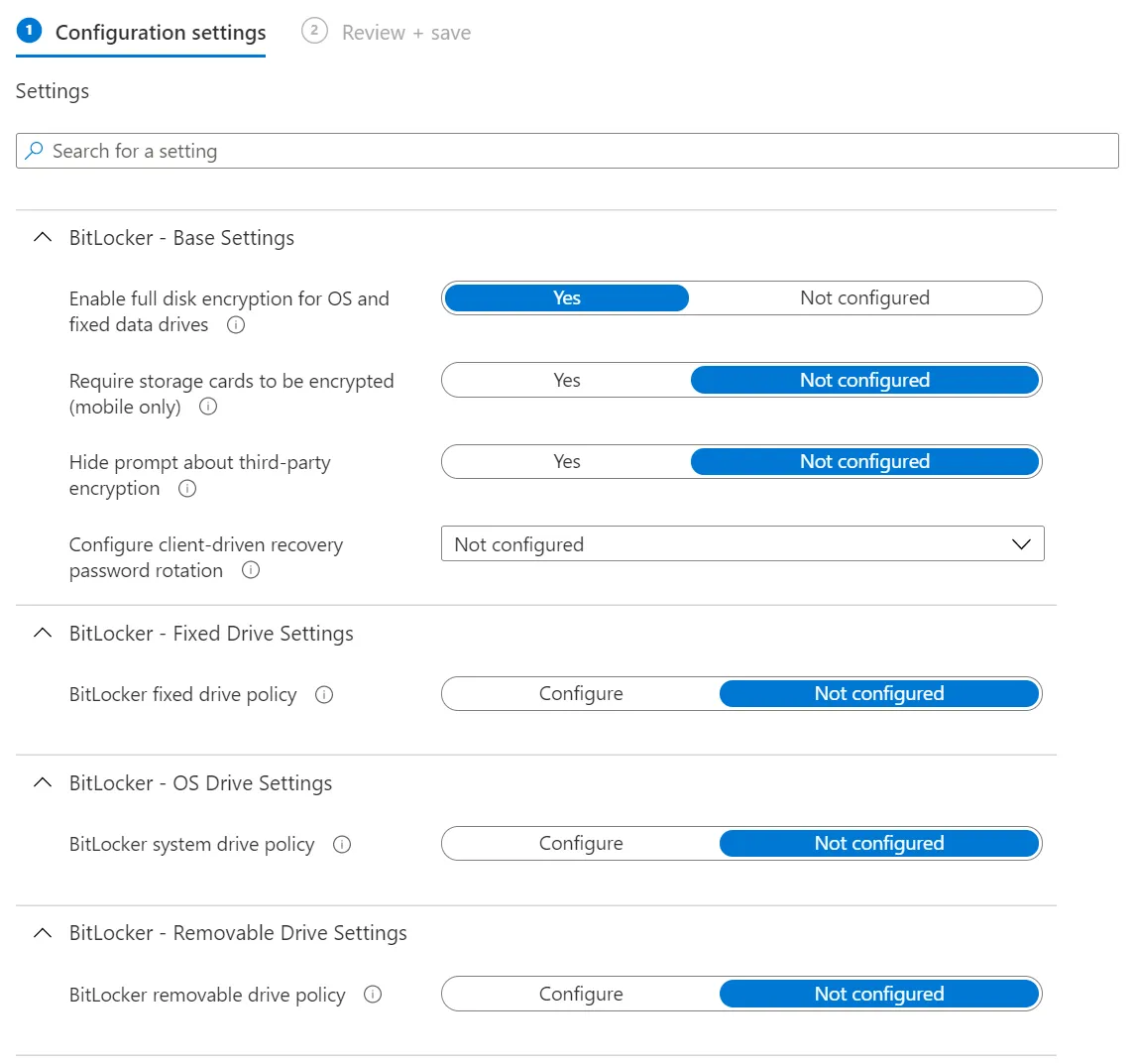
- As a name I choose “WIN BitLocker” or, if the customer has special naming conventions, one according to the concept. With the settings below I’ve had good experience over the past year:
How Do You Configure BitLocker for Hybrid Devices?
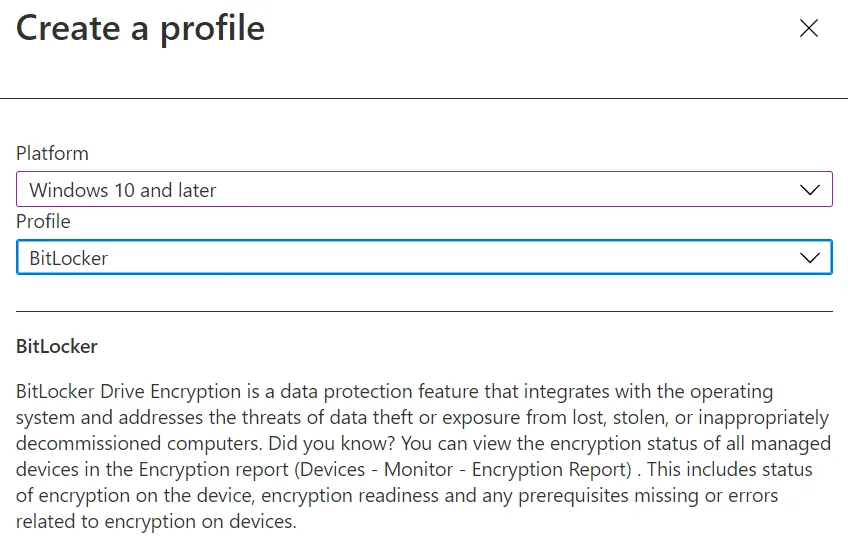
- I create the policy under Devices > Windows > Configuration profiles > Create profile
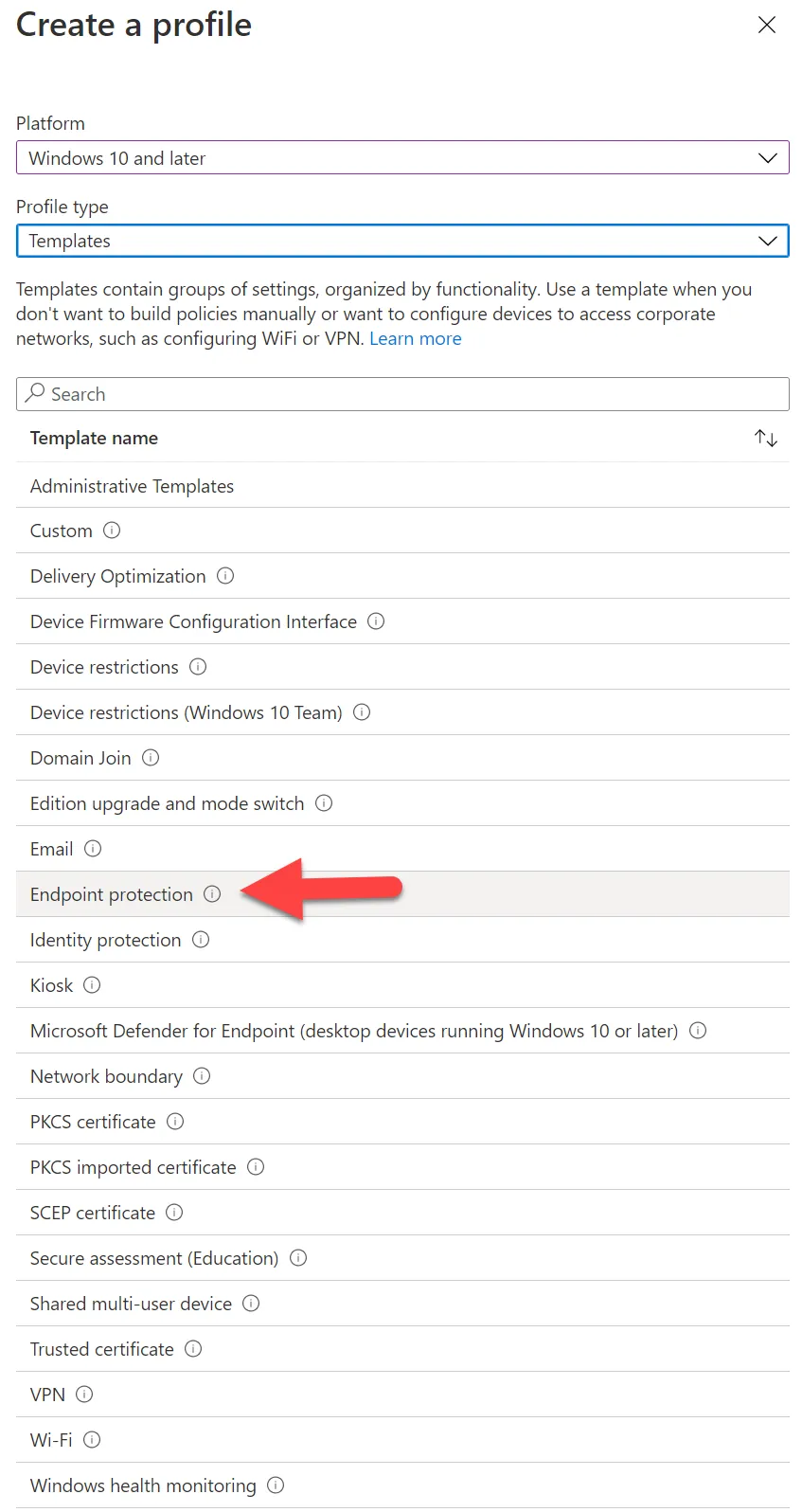
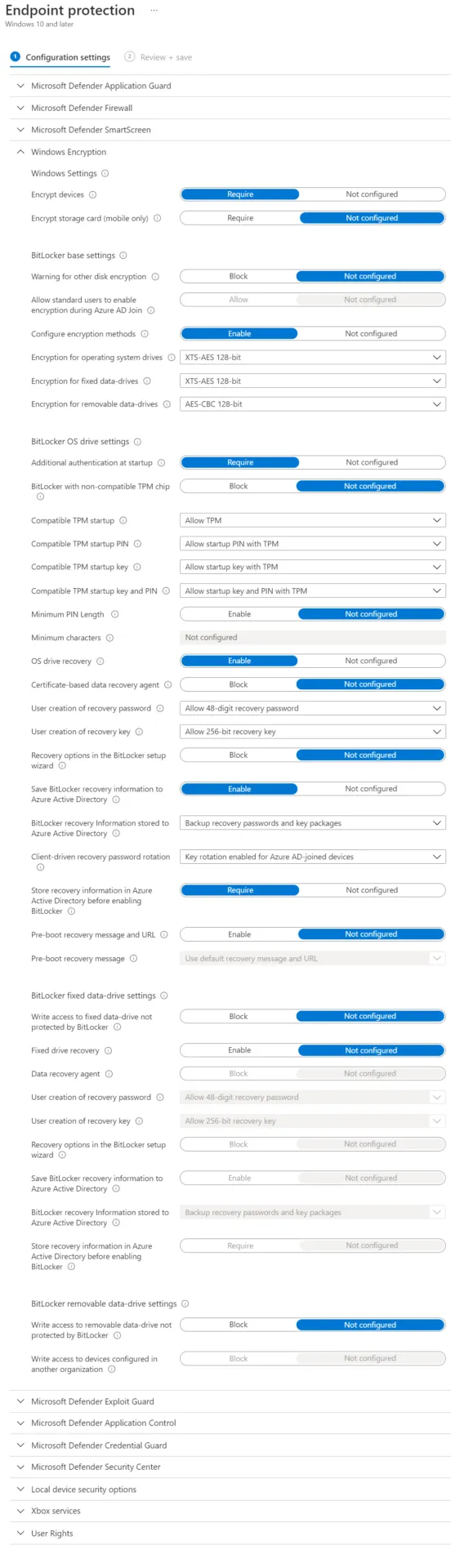
- As a name I choose “WIN BitLocker (Classic)” or, if the customer has special naming conventions, one according to the concept. With the settings below, the configuration also works with hybrid devices deployed via Autopilot as well as those enrolled via AD, Hybrid Sync and GPO:
How Do You Verify BitLocker Encryption Status?
Don’t just trust that the policy applied - check the actual encryption state. In the Intune admin center, “Devices > Monitor > Encryption report” shows the BitLocker status per device and flags devices stuck in “Encryption in progress” for longer than expected. On the device itself, manage-bde -status gives you the definitive answer, including whether protection is actually “On” and which encryption method is in use.
Why Do Devices Get Stuck Without Activating BitLocker?
The most common cause I run into is a missing or not-yet-escrowed TPM protector - if the recovery key hasn’t been backed up to Entra ID yet (check under the device’s “BitLocker keys” blade), Intune won’t consider the device compliant even if encryption technically ran. The second most common cause is a policy conflict: having both the “Endpoint security” disk encryption profile and the classic “Configuration profile” assigned to the same device produces unpredictable results - assign only one per device, matching the cloud-only vs. hybrid split described above.